Backpacking as a Relationship Stress Test
There is an old adage amongst seasoned travellers that you never truly know a person until you have travelled with them. While a city break or a beach holiday might reveal preferences for dining or museums, backpacking elevates this discovery process to an entirely different level. Stripping away modern comforts and adding the physical strain of carrying everything you need on your back acts as a powerful catalyst. It accelerates the timeline of a relationship, forcing couples to confront challenges that might otherwise take years to surface in domestic life. The wilderness doesn’t care about your job title or your carefully curated social media persona; it only cares about your ability to endure, adapt, and work together.
The art of shared suffering and emotional resilience
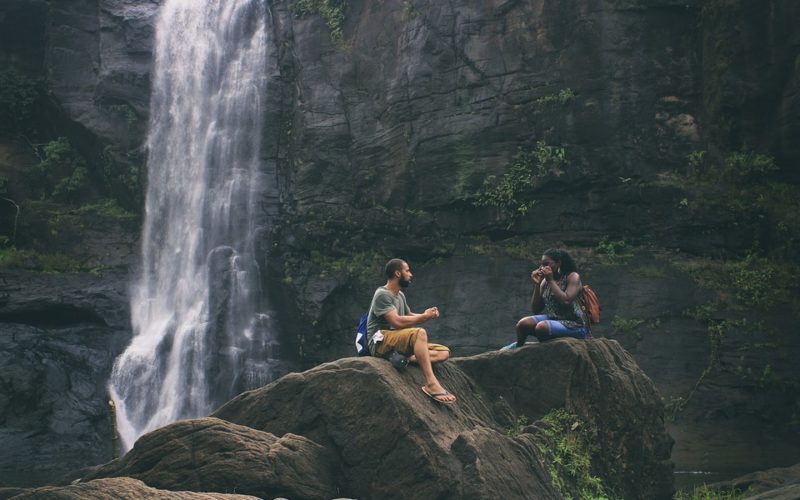
When you are three days from the nearest road, soaking wet, and exhausted, the facade of politeness tends to crumble. This is where true emotional resilience is tested. In normal life, we can retreat to separate rooms or distract ourselves with screens when we are irritable. On the trail, there is nowhere to hide. You witness your partner at their lowest, grimiest, and most vulnerable. How do they react when the tent pole snaps in a gale? Do they crumble into despair, or do they laugh at the absurdity of the situation? More importantly, how do you react to their distress? Backpacking reveals whether you are the type of couple who turns against each other when the pressure mounts or if you instinctively turn towards each other for support. Shared suffering, oddly enough, is one of the most potent bonding agents available, provided you both possess the resilience to weather the storm without blaming the other for the rain.
Decision fatigue and the dynamics of power
A multi-day hike is essentially a series of hundreds of small decisions made under duress. Where should we camp? Is that water safe to drink? Should we push on for another hour or stop now? These constant choices reveal the underlying power dynamics of your partnership. You quickly learn if one person tends to dominate decision-making or if there is a genuine democracy at play. It highlights how you negotiate compromise when both parties are tired and hungry. Perhaps one of you is a planner who needs to know the exact elevation gain for the day, while the other prefers to play it by ear. These differences can be complementary or catastrophic. The wilderness forces you to harmonise these styles. You learn that compromise isn't just about giving in; it is about trusting your partner’s judgement even when your own instincts might be screaming otherwise.
Communication beyond words
Effective communication is the bedrock of any relationship, but on a difficult trail, it becomes a survival skill. You cannot afford passive-aggressive silence when navigation is tricky, nor can you rely on subtle hints when you are injured or fatigued. Backpacking demands explicit, clear, and honest communication. You must articulate your needs—"I need a break," "My pack is too heavy," "I am scared of this ridge"—without fear of judgement. It also teaches you to read non-verbal cues. You learn to recognise the specific set of your partner’s shoulders that indicates they are hitting 'the wall' long before they say a word. This level of attunement, developed on the trail, translates beautifully back into everyday life, fostering a deeper, more intuitive connection.
Problem-solving as a cohesive unit
The wilderness is unpredictable, throwing curveballs ranging from sudden storms to missing trail markers. These moments are essentially pop quizzes for your relationship's problem-solving abilities. When things go wrong, the blame game is a luxury you cannot afford. You have to shift immediately into solution mode. This requires a unique form of teamwork where egos are left at the trailhead. You might discover that one of you is excellent at immediate crisis management while the other is better at long-term strategic thinking. Seeing your partner competently handle a crisis can be incredibly attractive, fostering a new level of respect. Conversely, realizing that you cannot coordinate to hang a bear bag without an argument might be a red flag worth noting.
Finding joy in the simple moments
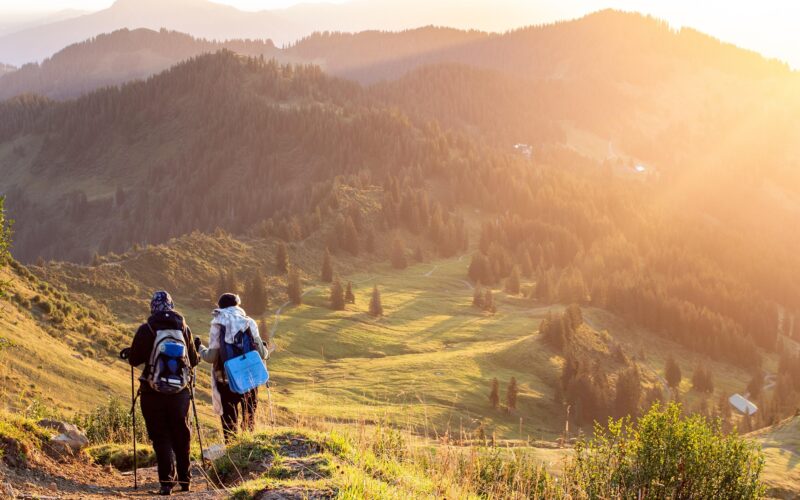
Ultimately, the stress test isn't just about surviving the hard parts; it is about how you share the rewards. The immense effort of hiking a mountain is paid off in the shared silence of a sunrise or the taste of instant coffee on a cold morning. These moments of pure, unadulterated joy are magnified by the effort it took to reach them. If you can find humour in the blisters and wonder in the landscape together, you are building a reservoir of shared positive memories. This ability to find the silver lining and share gratitude is perhaps the strongest indicator of long-term compatibility. If you can survive the trek and still want to share a sleeping bag at the end of the day, your relationship has passed one of the rigorous tests existence can offer.